
Insurance Policy and Stamp Duty

Terakhir Diubah : 01:13:30 - Friday, 23 September 2022

Berita - Insurance Policy and Stamp Duty - Sahabat Insurance | Solusi Lengkap Perlindungan Asuransi Anda

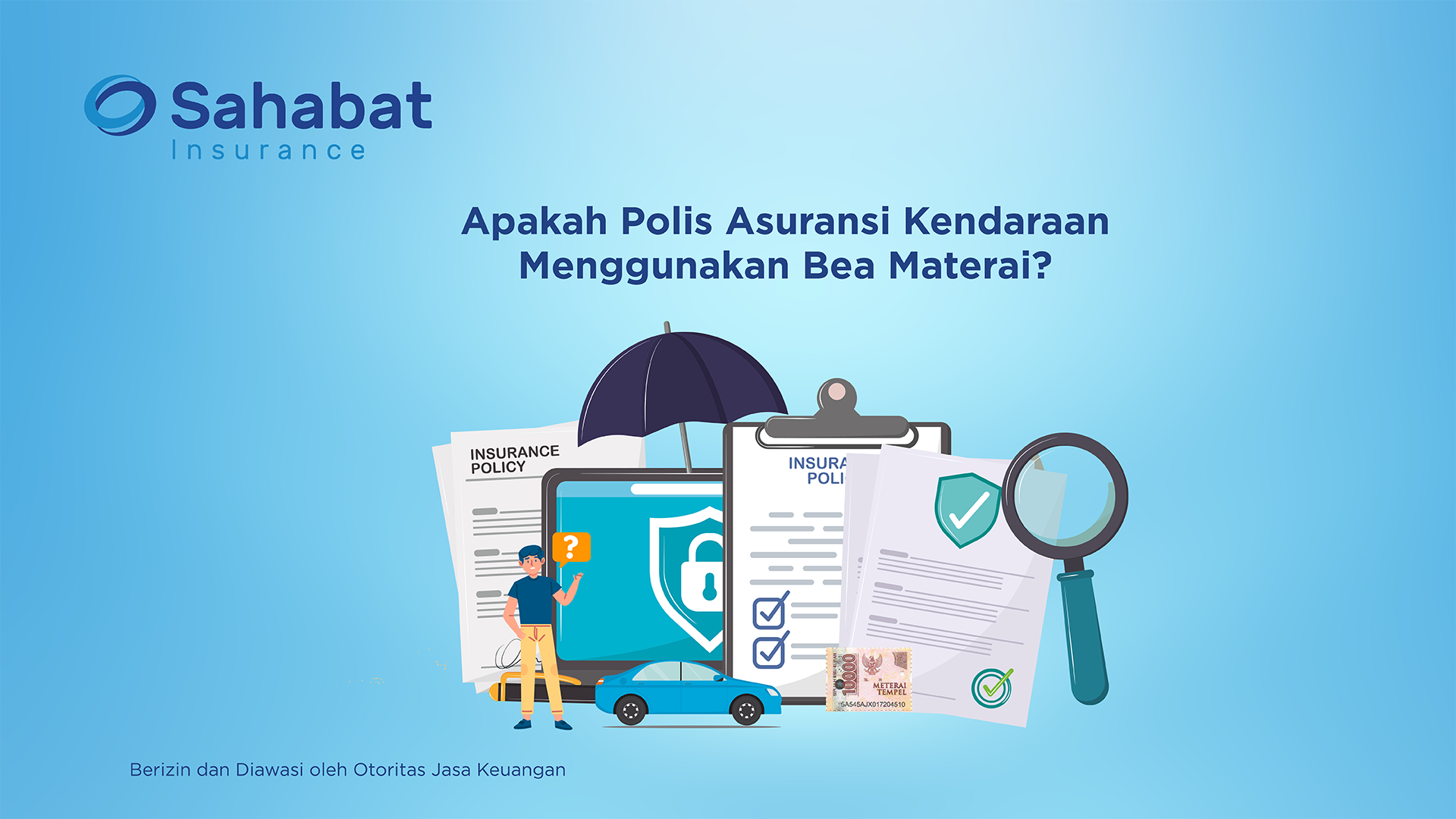
Insurance is an agreement between two parties, namely the insurance company and the policyholder (UU 40/2014). Referring to the above, an insurance policy is an agreement document between the insurer and the insured, so that the insurance policy is subject to a stamp duty (Rp 10.000). Stamp duty is charged on the amount of the premium paid in relation to a policy of general insurance.

Berita Lainnya

Factors Affecting Your Car Insurance Premium

Type of Coverage and Insurance Extension
The premium amount will be influenced by the type of coverage and also the insurance extension you choose. Generally, there are two types of coverage that you need to know, Comprehensive and Total Loss Only (TLO). With different types of insurance coverage available, the resulting premium is going to be affected. A comprehensive package with numerous features will naturally cost more than a lower-tier option. The same goes for optional extras, should you wish to add them on to your existing policy.
When buying insurance, it's crucial to carefully consider the coverage limits and ensure they align with your potential risks and needs.

Vehicle Age
The age of a vehicle is a key factor in determining car insurance premiums, both for comprehensive and Total Loss Only (TLO) policies. The Financial Services Authority (OJK) regulates which vehicles are eligible for comprehensive and TLO insurance in Indonesia.

Location
Motor Vehicle Insurance premiums are indeed affected by the area where the vehicle is primarily used. Insurance companies assess risks based on location, with areas experiencing higher accident rates, theft, or severe weather events often resulting in higher premiums.

Vehicle Usage
Car insurance premiums are indeed calculated based on risk, and vehicle usage is a significant factor in determining that risk level. Cars used for different purposes, like private, official, or commercial use, have varying levels of risk, and this is reflected in the premiums charged by insurance companies.

Always double check every policy guarantee and insurance premium offer according to your needs. Contact Sahabat Insurance marketing team for more info via WA 021-50508080.

The functions of the hazard lights

1. Use in an emergency
In accordance with the Law on Road Transport Traffic (LLAJ) Article 121 paragraph 1, every motorized vehicle driver is required to install a safety triangle, a hazard warning signal light, or other signals when stopping in an emergency situation on the road. For example, your vehicle stops due to an emergency during a breakdown, a traffic accident, or other conditions such as a tire that needs to be replaced. If you are in an emergency situation, then immediately pull over and press the hazard lights.
2. As a warning sign
The next function of the hazard light is as a warning sign. While driving on the road, there are times when you meet an emergency situation that can threaten your safety.
For example, your brakes don't work, or someone suddenly crosses the road, or other conditions that require you to stop suddenly in the middle of the road.
3. Not for Use in Bad Weather
A misunderstanding about the function of hazard lights is to use them in bad weather such as heavy rain or heavy fog.
Turning on the hazard lights when the weather is bad can actually endanger safety. This is because when the hazard light is active, the automatic turn signal cannot function. If you want to give a turn signal, the vehicles behind you will have a hard time understanding it.
4. Not a signal when entering the tunnel
Turning on the hazard lights when entering the tunnel should be avoided. The hazard light signal will actually confuse the driver of the motor vehicle behind you. When entering a dark tunnel or passage, simply turn on the main light or evening light to maintain visibility.
5. Not for convoys
There are still many car drivers who misinterpret the use of hazard lights. One of them is to use hazard lights during convoys or convoys.
It can be concluded that the actual hazard light function should only be used in an emergency, such as when an accident occurs or the car suddenly breaks down. Avoid turning on hazard lights without a clear situation because it can endanger safety.