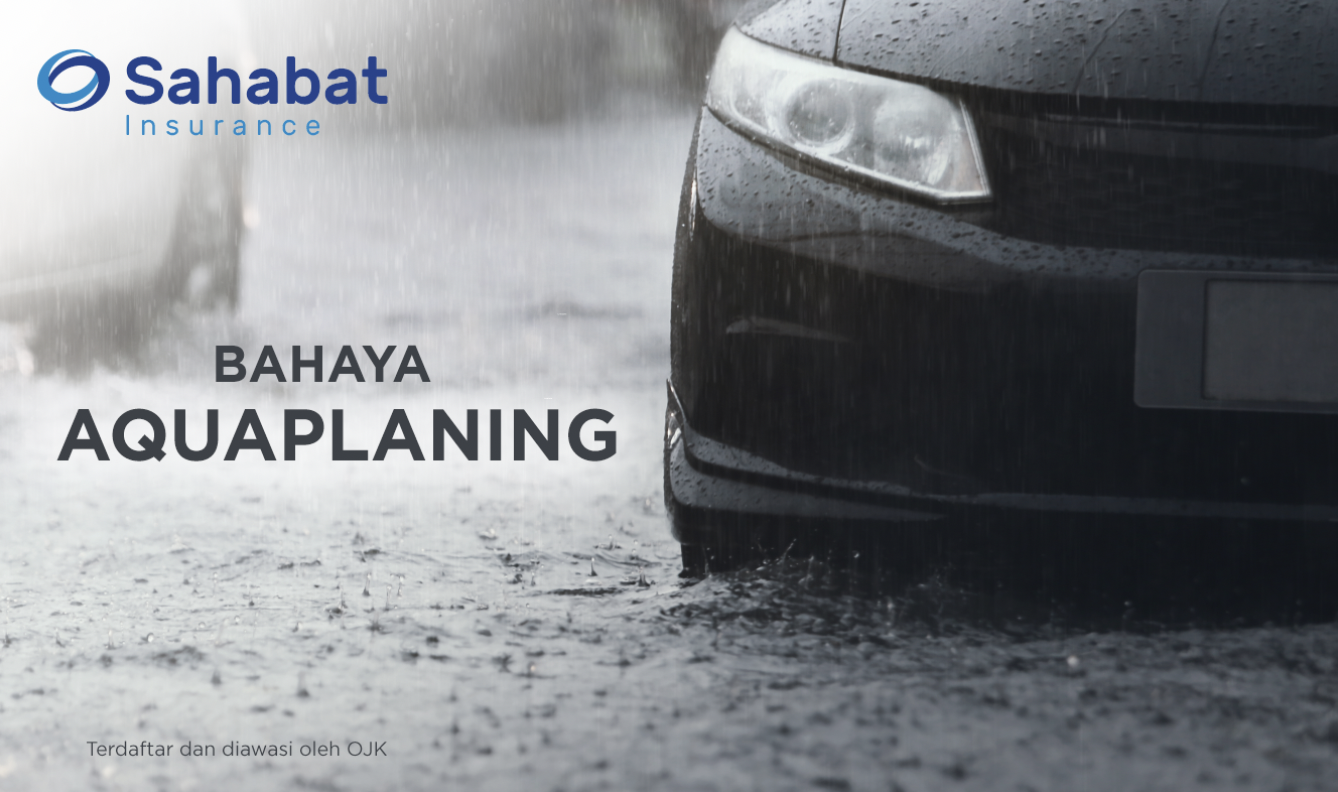

The Danger of Aquaplaning

Terakhir Diubah : 08:11:29 - Wednesday, 02 March 2022

Berita - The Danger of Aquaplaning - Sahabat Insurance | Solusi Lengkap Perlindungan Asuransi Anda

Ever heard of Aquaplaning?
Aquaplaning is a condition in which a vehicle  loses control where the main cause is puddles of water, such as rain and flooding. Water that is too large will make it difficult for the car to move or even slip. The main cause of aquaplaning is not only rainwater puddles, but can also be caused by water from other vehicles passing by. When the car passes through a slippery road due to water, it will be dangerous if you are not careful. Car tires will be difficult to control and can result in a collision or accident.
What are the characteristics of aquaplaning?
The first characteristic that can be felt is the sudden sound of the engine sounds louder than usual. This is because the engine that is exposed to the puddle too hard will become hot enough to make a sound.
Sudden change of clutch in gears. Though, you didn't. This condition will make the speed of the vehicle becomes faster so that it is out of control. The next characteristic is, the car feels lighter. This is due to the greater water pressure that can lift and float the car.
In addition, the back of the car on the sides will feel floating. This condition is called fishtailing.

When this happens, slow down slowly and straighten the steering wheel. Do not brake suddenly, find a safe place to stop to avoid an accident.
Contact Sahabat Insurance for information about vehicle protection at 021-50508080.

Berita Lainnya

The functions of the hazard lights

1. Use in an emergency
In accordance with the Law on Road Transport Traffic (LLAJ) Article 121 paragraph 1, every motorized vehicle driver is required to install a safety triangle, a hazard warning signal light, or other signals when stopping in an emergency situation on the road. For example, your vehicle stops due to an emergency during a breakdown, a traffic accident, or other conditions such as a tire that needs to be replaced. If you are in an emergency situation, then immediately pull over and press the hazard lights.
2. As a warning sign
The next function of the hazard light is as a warning sign. While driving on the road, there are times when you meet an emergency situation that can threaten your safety.
For example, your brakes don't work, or someone suddenly crosses the road, or other conditions that require you to stop suddenly in the middle of the road.
3. Not for Use in Bad Weather
A misunderstanding about the function of hazard lights is to use them in bad weather such as heavy rain or heavy fog.
Turning on the hazard lights when the weather is bad can actually endanger safety. This is because when the hazard light is active, the automatic turn signal cannot function. If you want to give a turn signal, the vehicles behind you will have a hard time understanding it.
4. Not a signal when entering the tunnel
Turning on the hazard lights when entering the tunnel should be avoided. The hazard light signal will actually confuse the driver of the motor vehicle behind you. When entering a dark tunnel or passage, simply turn on the main light or evening light to maintain visibility.
5. Not for convoys
There are still many car drivers who misinterpret the use of hazard lights. One of them is to use hazard lights during convoys or convoys.
It can be concluded that the actual hazard light function should only be used in an emergency, such as when an accident occurs or the car suddenly breaks down. Avoid turning on hazard lights without a clear situation because it can endanger safety.